The Post-Covid Surge in New Business Applications and What it Means for American Entrepreneurship
October 8, 2026


October 8, 2026
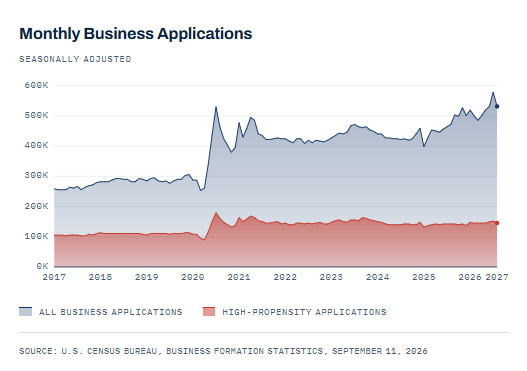
Business creation in America keeps surging. Every month, more and more people form new businesses across nearly every part of the country and sector of the economy. Consider three data points:
Will this persist? The present surge in business creation dates to mid-2020, after pandemic shutdowns and restrictions initially suppressed entrepreneurial activity. By every empirical measure we have, entrepreneurship has been growing since then. Yet questions linger about the quality of businesses being started, whether the rise in entrepreneurship contributes to employment growth and productivity, and if we can expect it to continue or regress to pre-pandemic trends.
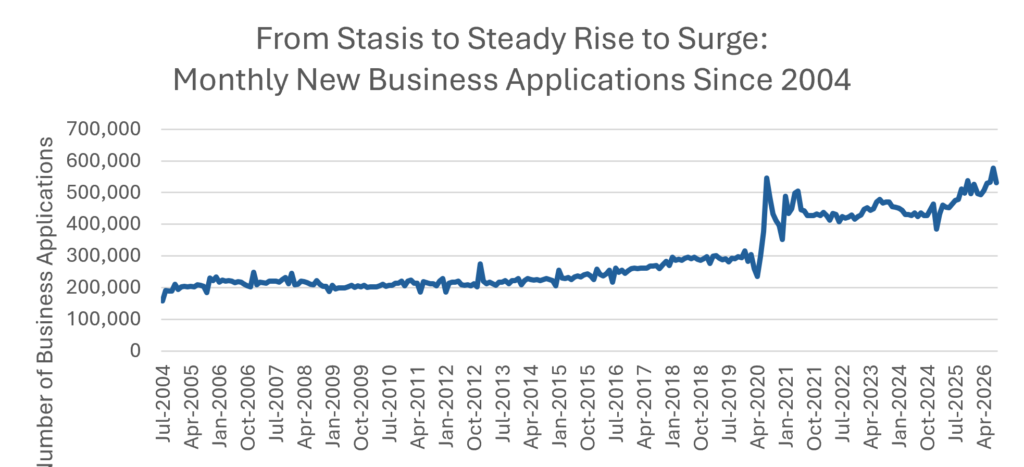
Figure 1. Source: Business Formation Statistics, U.S. Census Bureau.
This piece looks at trends in business creation, how today compares to prior decades, what researchers are saying about the surge, and whether we can expect it to continue. (See the end for a short note on methodology and data sets.)
In the mid-2010s, it looked to many like American entrepreneurs were “vanishing.” Observers and analysts identified a “startup deficit,” which suppressed productivity and employment growth. Instead of new firms challenging incumbents and disrupting markets, “superstar firms” were said to be dominating the economy and distorting growth. Economists wondered, “what happened to U.S. business dynamism?” By 2021, the Economic Innovation Group (EIG) declared the 2010s a “lost decade in American entrepreneurship.”
These claims and concerns rested on strong empirical ground. As shown in Figure 1, the total number of new business applications remained fairly flat into the early 2010s. From 2013, monthly new business applications began to rise steadily – and by 2019, both the level and rate of business applications were higher than in 2010, but not by a huge amount.
By a narrower measure, looking only at employer firms tracked by the Census Bureau’s Business Dynamics Statistics (BDS), entrepreneurship rose strongly in the 2000s, fell off a cliff during the Great Recession, and only recovered slowly (see Figure 2).
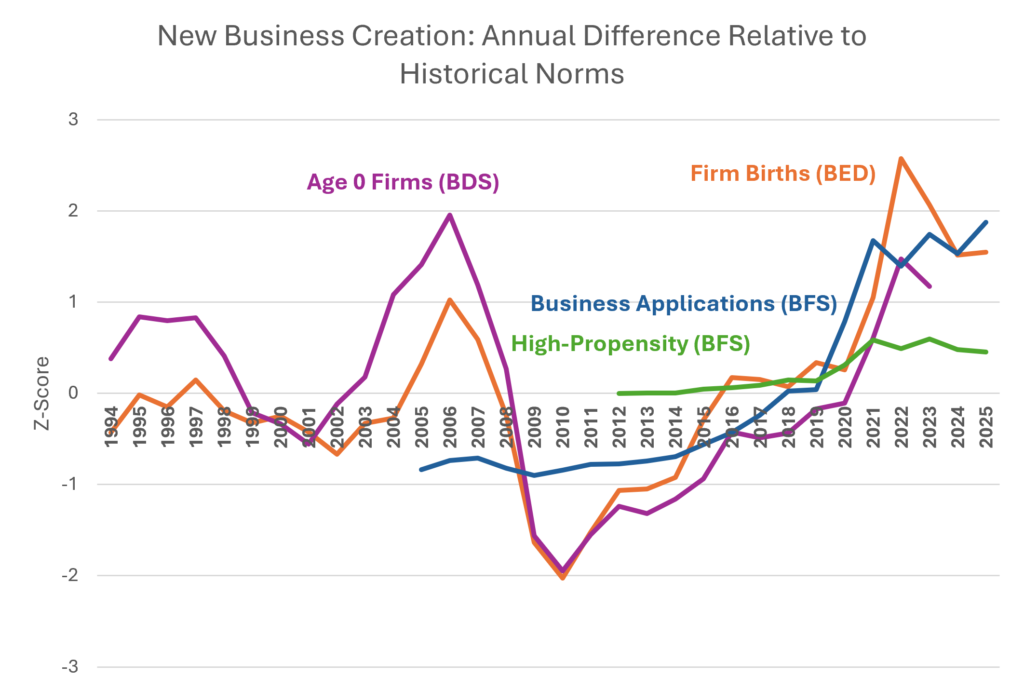
Figure 2. Sources: Business Employment Dynamics, Bureau of Labor Statistics; Business Dynamics Statistics, U.S. Census Bureau; Business Formation Statistics, U.S. Census Bureau.
Although not shown here, BDS data also indicate that, by 2019, the firm closure rate outpaced the startup rate, and job creation by startups fell relentlessly during the 2010s. Perhaps most remarkably, young high-growth firms – a principal source of job creation – had declined in number. Several policy initiatives were undertaken in response to these trends: the Startup America Initiative, JOBS Act of 2012, creation of Opportunity Zones, regulatory rollbacks, tax benefits, and more.
Looking back, such worries can seem silly. Business applications may have risen slowly through the 2010s, but they were still rising. A number of high-profile startups date their origin to this period: OpenAI came into existence at the end of 2015 (albeit as a nonprofit research entity); Anduril started up in 2017. Venture capital funding and deals were growing healthily through the decade.
Yet the downward trend in overall entrepreneurship – and key indicators such as firm growth and job creation from young firms – was real. Many foresaw that it would persist. Until it didn’t.
During the first six months of 2020, the pace of monthly new business applications slowed, as restrictions and shutdowns either prevented or deterred people from starting up. Existing business owners suffered, too: the number of “active business owners” fell by 22 percent from February to April 2020. And then…boom.
Since July 2020, the number of monthly new business applications has never returned to the levels of the 2010s. This is the literal dictionary definition of a step change: the monthly average from July 2020 through August 2026 was 89 percent higher than 2010-19, as shown in Figure 3. Similarly, the monthly average of high-propensity business applications since 2020 is 45 percent higher than the prior decade.
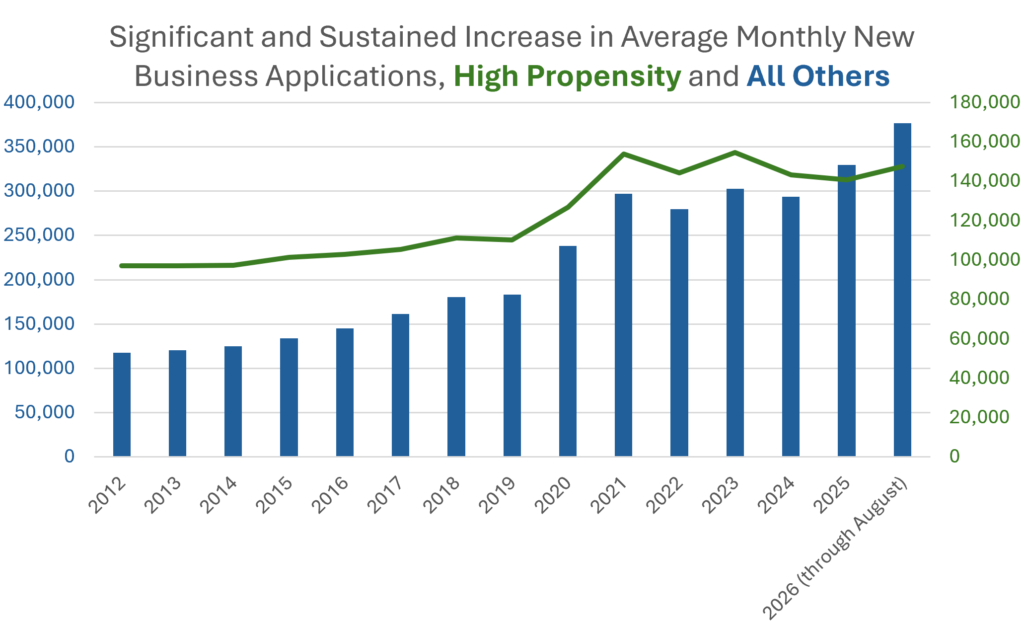
Figure 3. Source: Business Formation Statistics, U.S. Census Bureau.
Employer firm creation, according to BDS data, also rose sharply from 2021 to 2023 (the latest year for this data). In 2022, in fact, the number of new, age 0 employer firms in the BDS data finally came close to the peak year of 2006. Across multiple government data sets, as shown above in Figure 2, we can see the magnitude of the pandemic surge relative to prior years.
Every sector of the economy experienced an increase in business formation, too, although the magnitude varies. By 2025, in the two sectors that account for the biggest shares of total business applications annually, Retail Trade and Professional Services, business applications were 40 percent and 42 percent higher, respectively, than in 2020. (See below for further discussion of sectoral differences in high-propensity businesses.) Researchers have shown that increases in these sectors were related to a sharp increase in online retail businesses and new high-tech firms. (Many tech companies are classified in the Professional Services NAICS category).
According to multiple indicators, then, the “startup deficit” of the 2010s has been dramatically reversed.
After the initial Covid spike in 2020 and 2021, monthly business applications ebbed and flowed: falling in 2022, rising in 2023, falling in 2024. Yet since 2025, a renewed surge has meant more new businesses than ever. It’s hard to overstate the magnitude:
This renewed surge has been driven mostly by businesses without a Census-identified propensity to become employer firms. While the number of high-propensity business applications has risen in 2025 and 2026, that followed a sharp slowdown in 2024. Some point out that this divergence between nonemployers and likely employers could reflect effects of artificial intelligence. (See below for further discussion.)
Nevertheless, it’s worth underscoring just how sizeable the overall recent surge is. Since the beginning of 2025, the per capita rate of business applications – relative to the labor force population – is twice what it was during the first half of the 2010s.
An aggregate increase in business applications does not, however, mean a straight line to employment and growth. Over the past two years, high-propensity business applications “have not kept pace” with total business applications. That means more businesses are starting as nonemployers and, at least according to Census Bureau criteria, display none of the characteristics that would point toward becoming employers at some point. Figure 4 shows this divergence.
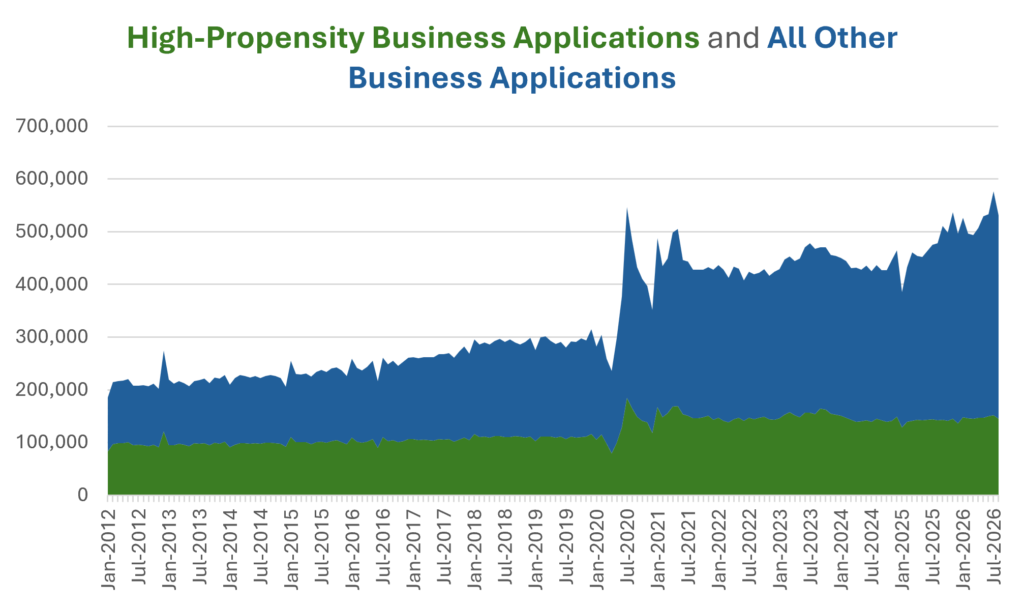
Figure 4. Source: Business Formation Statistics, U.S. Census Bureau.
Most of the increase in business applications since 2020 has come from those that are not deemed to have a high propensity of becoming employer firms. That could indicate that more people are pursuing side businesses (see below). This has also extended the steadily falling high-propensity share of business applications, as shown in Figure 5.
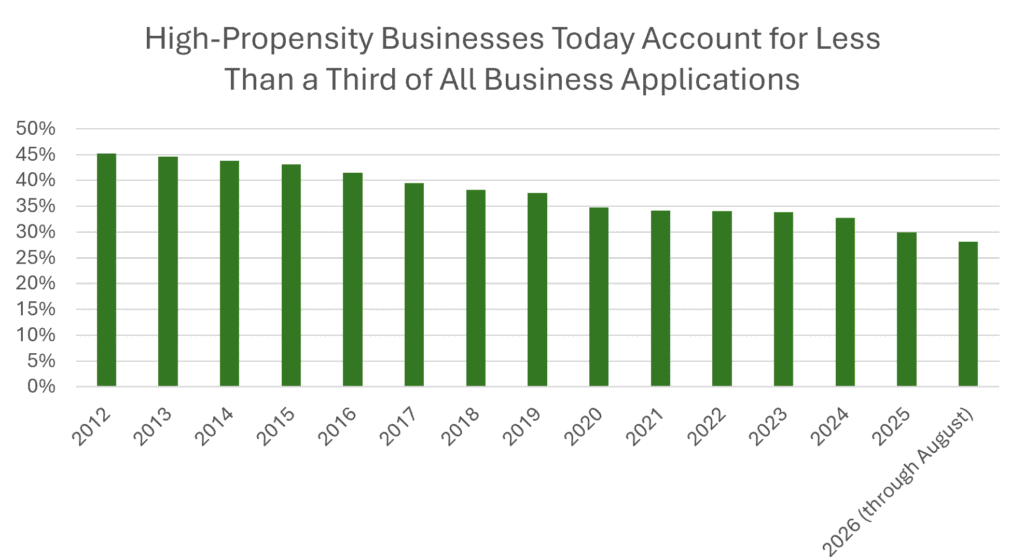
Figure 5. Source: Business Formation Statistics, U.S. Census Bureau.
Even more concerning, applications from two important types of high-propensity businesses – those from corporations and businesses with planned wages – have fallen back to, and even below, pre-Covid levels, as shown in Figure 6. As Nathan Goldschlag of EIG points out in a recent report, “these two series paint a much gloomier picture of likely employer startups in recent years.”
Likewise, in the Kauffman Indicators of Entrepreneurship (based on a different Census Bureau dataset), the share of people starting a new business in pursuit of economic opportunity rather than necessity, peaked in 2022 and has fallen since then. It does, however, remain above the levels of the 2000s and most of the 2010s.
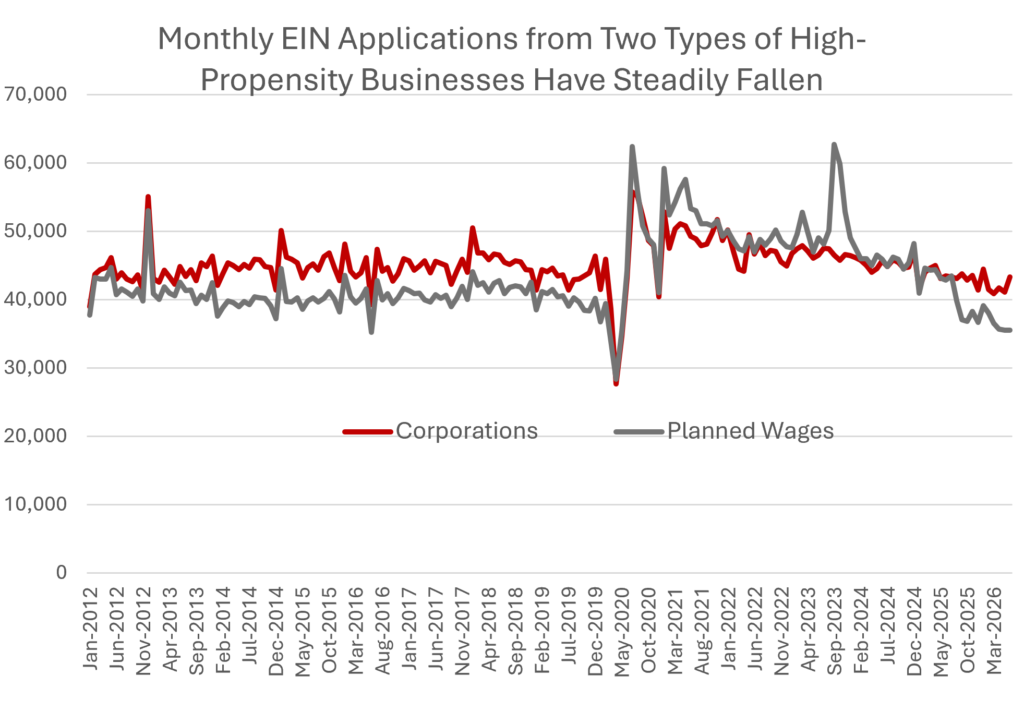
Figure 6. Source: Business Formation Statistics, U.S. Census Bureau.
This difference in types of new businesses also recurs across economic sectors. By 2025, out of 19 NAICS sectors analyzed, 12 had reverted to pre-Covid levels of high-propensity business applications. The divergence in some sectors is stark. In Professional Services, for example, total business applications in 2025 were 42 percent higher than in 2020, while high-propensity business applications were just 12 percent higher. While total business applications in Retail Trade in 2025 were 40 percent higher than in 2020, those from high-propensity businesses were 4 percent lower.
Divergence between overall and high-propensity business applications has led some to question whether these trends will actually result in overall job creation. Others point to causal pathways by which rising business formation could, and perhaps should, generate positive economic impacts. Gusto has shown how these nonemployers and “solopreneurs” serve as “hubs in a broader system of subcontracted labor that expands their economic footprint.”
While some nonemployers eventually transition to become employer firms, many do not, yet support additional activity beyond their own earnings, to the tune of $72 billion per year paid to contractors. Additionally, an analysis earlier this year by the Federal Reserve Bank of Richmond noted that, since 2025, the renewed surge in business applications has taken place in sectors with historically higher employment growth. This “could be a tailwind for future job creation.”
At the same time, projected creation of employer businesses has risen. Figure 7 shows the Census Bureau’s actual and projected business formation, within eight quarters. Even as high-propensity business applications leveled off starting in 2024, projected rates of employer business formation have risen. The growing gap raises questions about how much reliance we should put on the projection data – especially as applications from very high-propensity sources (corporations and planned wages) have declined. (Goldschlag, in his recent EIG report, points out that methodological changes to the collection of business application data may mean that projected business creation data are less reliable than before.)
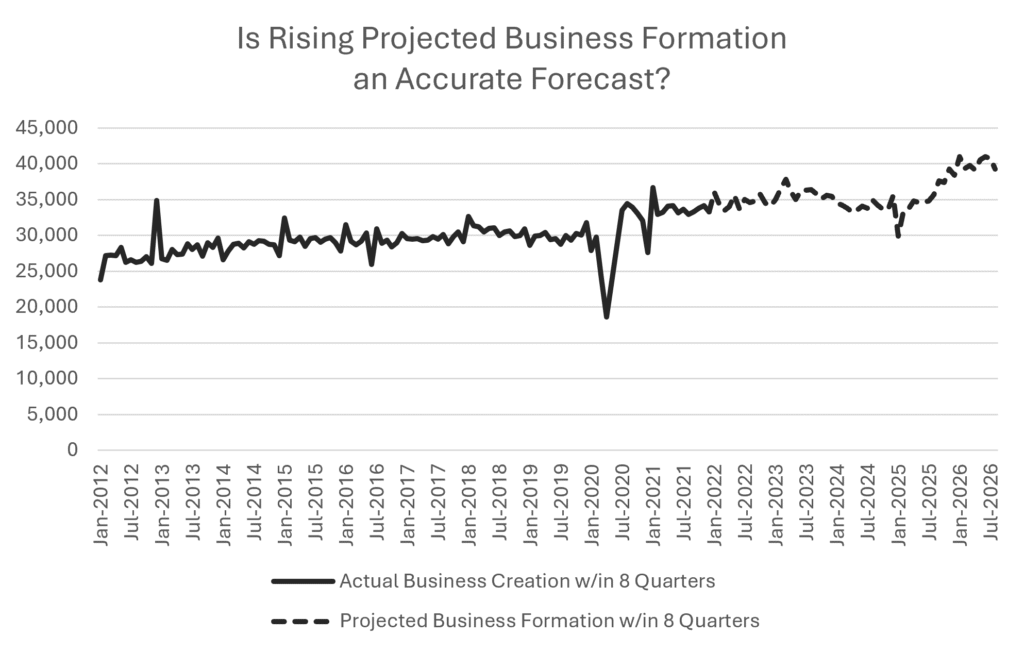
Figure 7. Source: Business Formation Statistics, U.S. Census Bureau.
As discussed below, both trends – relatively fewer high-propensity businesses yet higher projected creation of employer firms – could be true because of AI.
The rise in new business formation has attracted the analytical attention of economists and other researchers who, over the last several years, have identified a handful of potential causes. Some are closely related to the Covid-19 pandemic, leading some to wonder whether the increase is transitory. Other possible explanations may point to more enduring trends.
Covid: Remote Work, Quitting, and Stimulus
One of the most significant aspects of the Covid years was the increase in remote work, with millions of people working from home for prolonged periods of time. According to some research, this contributed to the increase in business creation because remote work provided “the time and protection needed for entrepreneurial experimentation.” With time saved through greater productivity and no commute – and perhaps some more flexibility in how they spent their time – workers had more capacity to test entrepreneurship.
Relatedly, the pandemic saw an increase in people leaving their jobs, what became known as “the Great Resignation.” In 2021 and 2022, millions of Americans quit their jobs at historically high rates. While quitting has gradually returned to pre-pandemic levels (and lower), early analysis by Ryan Decker and John Haltiwanger identified quits as a likely source of at least some of the increase in business creation. Covid quitting may have driven an increase in entrepreneurship in two ways, interacting with the rise in remote work.
First, the pandemic opened new economic opportunities and sources of demand – recall the significant increase in 2021 in the creation of online retail businesses. That’s certainly not the only example: new business creation also rose significantly in the tech sector, driven in no small part by growing venture capital funding in 2021 and 2022. Second, as remote work provided more people time to explore new ideas, it’s perhaps not surprising that some share of that exploration led to ideas with traction and people quitting to pursue them further.
Another potential Covid-related explanation, related to those above, was government financial support. Through the CARES Act, the American Rescue Plan, and other efforts, the federal government distributed large amounts of money through various mechanisms. Stimulus checks, expanded unemployment insurance, small business support, and more may have served as an entrepreneurial safety net, enabling more people to take the leap.
Time and money – two critically scarce resources for entrepreneurs – existed in relative abundance for many Americans. Facing new economic opportunities to be seized and new demand to be met, many started new businesses.
None of these pandemic explanations, however, explain the persistence of the increase in business formation and the renewed surge of the last two years. As Americans returned to offices, the quit rate fell, and stimulus effects faded, business creation has not only remained at a high level but also continued rising. A big reason is likely the spreading adoption of AI tools.
Genuine Entrepreneurship, Artificial Intelligence
Perhaps the most compelling, and also confounding, explanation for the rise in entrepreneurship pertains to the role played by AI. It may also offer some insight into why nonemployer business applications have risen so much more compared to those likely to become employers. AI tools may be making it easier to create a business, but also helping new businesses start smaller.
Earlier this year, Liya Palagashvili showed that, in the economic sectors where AI use is most prevalent, the increase in business formation since 2024 “came entirely from applications that do not display employer intent.” In fact, in those AI-exposed sectors, high-propensity business applications decreased over the last two years. With fewer people quitting their full-time jobs, that could indicate an increase in side businesses, supported by AI.
Other papers agree that AI has enabled more entrepreneurship, yet find positive economic impacts:
The overall effect of AI on entrepreneurship could, therefore, cut several ways. Thanks to AI efficiencies, more people may find it economical to start a business. Yet a large share of those new businesses will start either with no employees – and no plans to hire – or with fewer employees than in the past. In the aggregate, the former effect (more new businesses), could outweigh the latter (fewer employees in those new businesses), meaning the overall employment impact of entrepreneurship would not diminish. At the same time, entrepreneurs may also find that AI enhances productivity and helps them remain lean, which could mean lower rates of job creation as they grow.
Since 2020, business creation in the United States has risen and fallen, yet by some measures remained at an elevated level compared to pre-Covid decades. Several different data sets reflect this broad pattern. We shouldn’t forget, however, that the country was mired in a decades-long slump in business dynamism preceding the pandemic. Debate over the 2020s entrepreneurship boom revolves around at least two issues: demographics and AI.
Demographics: Boost or Burden?
Prior to the pandemic, when researchers analyzed the “startup deficit,” they identified slowing labor force growth as a principal cause. Since the size of the labor force is related to overall fertility and population growth – and since the U.S. population continues to age and expand slowly – it’s reasonable to think that this will inevitably bring down the pandemic business creation burst.
At the same time, an analysis by the Bank of America Institute finds that, even though business creation “still skews to older generations,” it has been rising among Gen Z, those born between 1997 and 2012. Their rate of filing business applications has risen in recent months. Younger Americans may increasingly see entrepreneurship as viable pathway – if the rate of business creation rises even as the population and labor force grow slowly, perhaps that can mitigate broader demographic trends.
AI: Help or Hindrance?
If AI were turbo-charging entrepreneurship, we might expect to see it show up in those parts of the economy where AI use is most widespread. As researchers point out, however, this does not appear to be the case. And, as outlined by EIG’s Goldschlag, employment in young firms – those most likely to create net new jobs – has fallen in recent years in sectors with the highest AI exposure.
Yet, as noted above, AI tools may provide a clear boost to entrepreneurship in multiple ways, and AI isn’t going away anytime soon. If anything, its impact on entrepreneurship – on entry, growth, and economic impact – might only be expected to increase. Several recent papers, noted above, point in this direction.
Between May and October of last year, the Center for American Entrepreneurship conducted roundtables with AI-focused entrepreneurs in Houston, Atlanta, Maimi, and Milwaukee. The purpose of the roundtables was to better understand the importance of AI to American entrepreneurship, and the importance of entrepreneurs to the continuing development and application of AI to business and the broader economy.
Roundtable participants reported that they are aggressively incorporating AI, using the technology to enhance virtually every aspect of their operations. Notably, many participants reported that they are hiring more due to their incorporation of AI, while others reported flat to slightly reduced hiring. With regard to challenges, participants reported that AI is developing so quickly that they often struggle to keep up with new applications and how best to incorporate those tools into their businesses. Participants also expressed concern regarding data and intellectual property security, challenges in properly interpreting AI model outputs, and legal liability issues.
One wild card in this outlook is the public policy environment. Our next piece will look at what recent trends in business creation mean for policymakers, and steps they can take to support this new generation of entrepreneurs and address some of the more concerning trends and challenges.
The U.S. Census Bureau deserves enormous credit for the creation and improvement of high-quality data sets tracking the dynamics of American firms. This article drew particularly from the Business Formation Statistics (BFS) and Business Dynamics Statistics (BDS) resources. Terms used:
Dane Stangler has served as vice president of strategic initiatives at the Bipartisan Policy Center, president and chief policy officer at Startup Genome, and vice president of research and policy at the Kauffman Foundation. He thanks Bob Litan and John Dearie for their contributions to this essay.