What American Entrepreneurs Told Us About AI
January 8, 2026

January 8, 2026
 John Dearie
Between May and October of 2025, the Center for American Entrepreneurship conducted four roundtables with entrepreneurs who are using and developing artificial intelligence (AI) tools and applications to launch and grow their businesses. The roundtables took place in Houston, TX on May 6th, Atlanta, GA on September 11th, Miami, FL on September 24th, and Milwaukee, WI on October 24th. The discussions were conducted in collaboration with gener8tor, a national and international network of startup accelerators, based in Madison, WI, which manages 105 startup accelerators across 47 communities in 28 states. Joe Kirgues, co-founder of gener8tor and a member of CAE’s board, moderated the roundtables.
The purpose of the roundtables was to better understand the importance of AI to American entrepreneurship, and the importance of entrepreneurs to the continuing development and application of AI to business and the broader economy. More specifically, given the historic significance and profound implications of AI, CAE and gener8tor wanted to better understand how entrepreneurs are using AI to launch and develop their businesses, and to hear about any difficulties or challenges they might be experiencing in adopting AI, or as a result of AI.
More than 50 entrepreneurs, split evenly between men and women, participated in the four roundtables, representing a wide range of industry sectors including data processing and analytics, software development, aerospace contracting, human resources and workforce development, health and wellness, energy analytics and management, wastewater treatment, transportation, warehousing and logistics, office management and automation, travel services, business consulting services, and insurance and financial services.
Roundtable participants reported that they are aggressively incorporating AI, using the technology to enhance virtually every aspect of their operations. Notably, many participants reported that they are hiring more due to their incorporation of AI, while others reported flat to slightly reduced hiring. With regard to challenges, participants reported that AI is developing so quickly that they often struggle to keep up with new applications and how best to incorporate those tools into their businesses. Participants also expressed concern regarding data and intellectual property security, challenges in properly interpreting AI model outputs, and legal liability issues.
Artificial Intelligence and Entrepreneurship
Though AI seemed to appear out of nowhere with the launch of ChatGPT by research and development company OpenAI in November of 2022, it is not new. In fact, the idea of AI – mechanical devices performing human-like computations – dates back thousands of years. The modern field emerged in the years following World War II. In 1950, famed English mathematician Alan Turing published “Computer Machinery and Intelligence,” in which he proposed a test of machine intelligence called “the imitation game.” The term “artificial intelligence” was first used in 1956 at a Dartmouth College computer science workshop.
AI has been part of modern life for decades, powering everything from chatbots to Internet search results, digital advertising, and algorithm-driven social media. But the field accelerated dramatically in recent years with the availability of ever-greater amounts of data coupled with easier and increasingly affordable access to immense computing power. In just a few years, AI has developed from the “generative” phase, by which vast amounts of data are processed to reveal patterns and relationships, which are then used to predict outcomes or produce requested outputs, to a newer more dynamic phase called “agentic” AI, by which autonomous AI programs are able to execute complex, multi-step tasks to achieve a larger objective.
The age of AI has arrived, with its transformative implications being compared to other revolutionary technologies like the Gutenberg printing press, railroads, electricity, and the Internet. In coming years, AI – if developed properly and safely – will power once unimaginable advances in science, transportation, energy, combating climate change, and medicine.
Entrepreneurs are critical to that future. Entrepreneurs have always been the leading edge of American innovation. Indeed, most of the great innovations that have defined the economic landscape over the past several hundred years – the cotton gin, the steam engine, railroads, electrification, the automobile, airplane, air conditioning and refrigeration, the computer, countless Internet applications, and wireless communication – came from entrepreneurs, who experiment and innovate in ways that existing businesses cannot or will not. Repeated research has also demonstrated that the innovations contributed by startups drive productivity growth and economic growth, and account for virtually all net new job creation.
Entrepreneurs are the intrepid trailblazers who chart the frontier of economic progress. They are now using AI to innovate, solve problems, and create value.
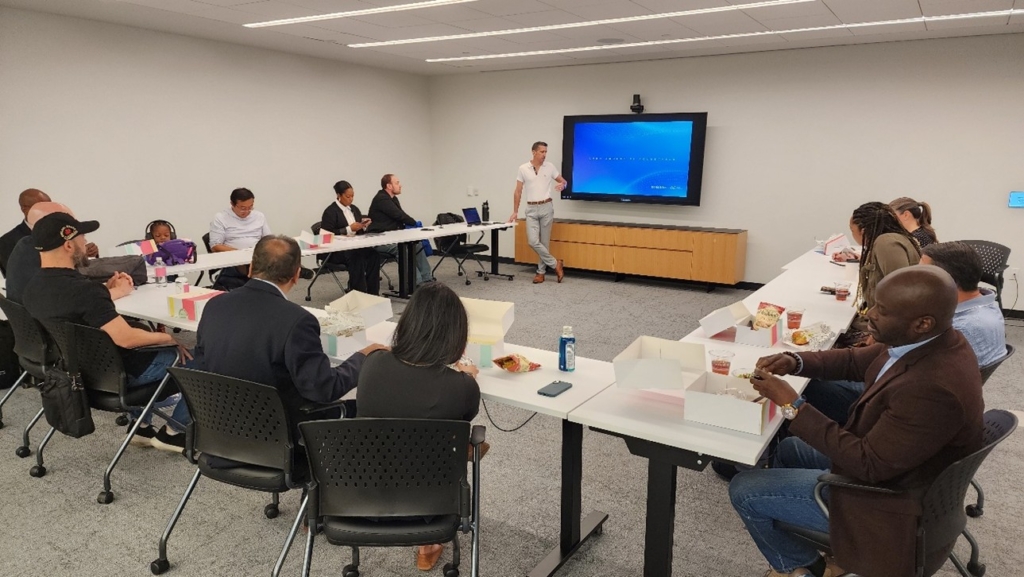
The Houston roundtable on May 6, 2025.
Major Roundtable Take-Aways
Entrepreneurs are using AI in many ways: Roundtable participants reported that they are aggressively incorporating AI into their businesses and using the technology to enhance virtually every aspect of their operations. Applications include:
Asked if money was not an issue would they hire an AI tech advisor to identify additional ways to use AI, every participant at the Houston and Atlanta roundtables said yes.
Value of Open-Source Models: Many participants commented that open-source AI models entail a number of significant advantages for startups. AI models and tools are developed by complex ecosystems that include model developers, AI developers who build tools to use models, and end-users like entrepreneurs who leverage the models and tools for their own innovative purposes. Some AI models – referred to as closed-source models – are models operated independently, most often by a private company, that are built and operated without outside input and interaction. As a result, closed models entail trusting the design, judgements, and intent of the proprietary model developers. This can also create vendor lock-in, leaving startups vulnerable to a single company’s pricing decisions, service disruptions, and technology roadmap. Proprietary models also tend to be expensive.
Open-source AI, by contrast, entails freely accessible source code, fostering a collaborative environment for developers to utilize, modify, and distribute AI technologies to end-users like entrepreneurs. As the world has learned from the development of other code-based technologies including cybersecurity, open sourcing promotes safety and security by allowing for continuous independent evaluation and innovation community feedback. The Federal Trade Commission recently observed that open sourcing also promotes competition and innovation, and improves consumer choice.
Perhaps most importantly, open-source AI democratizes access to one of the most powerful innovation tools in history, enabling entrepreneurs worldwide to collaborate and drive extraordinary innovation across countless fields in the coming years. Advantages of open-source models reported by a number of roundtable participants include affordability, “security measures that we could never build ourselves,” greater optionality and adaptability – “We often build small language propriety AI models for firm-specific tasks, but we still use large open-source models for experimentation and testing” – allowing entrepreneurs to more easily build applications on top of the AI model, and greater transparency and accountability regarding the interpretation of model outputs.
Job Creation: One of the most interesting take-aways from our roundtable discussions is the highly varied relationship between AI adoption and hiring Participants at the Houston and Atlanta roundtables, for example, reported that in addition to using AI tools to automate time-consuming business chores and run their businesses more efficiently, many also use AI to identify emerging problems and needs of their customers, and to develop new product and service ideas to address those identified needs. In other words, many entrepreneurs are using AI to extend and deepen their relationship with customers – and are hiring more than they otherwise would as a result.
We discussed this finding with Fast Company, Quartz, and Newsweek.
Participants at the Miami and Milwaukee roundtables gave a more nuanced response. Most reported flat to slightly reduced hiring, as the incorporation of AI had increased firm productivity and reduced the need for additional personnel. As an example, one participant, a military contractor who frequently submits RFP’s to the Defense Department, mentioned that writing RFPs is very labor intensive and that the firm had, until recently, employed nearly a dozen junior staff to write RFPs, with each requiring several weeks to complete. But after recently hiring an employee who was able to build a proprietary AI agent that can produce quality RFPs in 20 minutes, the firm had let most of its RFP-writing personnel go.
Another participant explained that AI has altered his calculation of risk-adjusted return on capital with regard to employees. “If I find someone who can raise our efficiency and revenue using AI, then sure, I’ll hire that person. But AI has really raised the bar to justify additional hiring.”
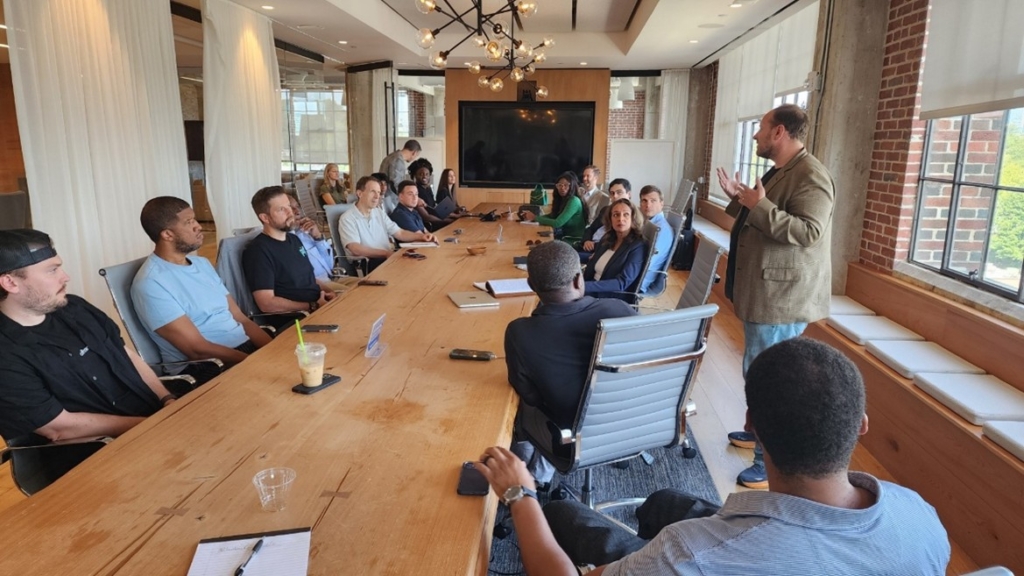
The Atlanta roundtable on September 11, 2025
AI Workforce Needs: Given the accelerating importance of AI to the success of their businesses, roundtable participants agreed that an AI-fluent and -competent workforce is increasingly important to American entrepreneurs. Despite that general response, the workforce portion of our roundtables revealed significant nuance regarding desired employees as businesses work – and sometimes struggle – to incorporate AI tools.
For example, asked what kinds of jobs they are creating and what sorts of candidates they are searching for, several participants at the Atlanta roundtable responded that AI skills have become more important than general professional experience. “I’m looking for a general AI skill set, rather than to fill a titled position,” one participant told us. Another commented that her focus on talent has shifted toward higher salary, more experienced and specialized talent. “I want leaders who can use AI to take my company to the next level – more visionary leaders who can manage fewer junior people to achieve high-value progress.”
By contrast, other participants said that AI is developing so quickly that it’s difficult to keep up, and that the knowledge and expertise of older and more experienced employees is often obsolete. Younger employees who have experienced and are proficient in using cutting edge AI tools and applications, therefore, are increasingly of high value. “My focus is domain expertise,” said one participant. “I don’t care where they went to school or how old or experienced they are.”
When asked the same questions, participants at the Wisconsin roundtable expressed greatest interest in “AI engineers, developers, and data scientists,” with employment prospects favoring applicants with PhDs. One participant shared that he had been repeatedly “ghosted” by potential employers, even as a third-year graduate student in computer science. “Employers have the leverage, and they’re very demanding.”
Another participant agreed, saying that while demand for candidates with AI expertise is very high, the competition for those positions is very intense. “That may drive a lot of entrepreneurship in coming years,” he continued, “as top quality applicants who don’t land jobs at large technology companies choose to start their own companies instead.” Another participant – an undergraduate student and entrepreneur – agreed: “Many of my computer science classmates aren’t able to find jobs, so they’re starting their own businesses with the help of AI.”
Challenges Posed to Entrepreneurs by AI
The remarkable use-value and business-enhancing power of AI notwithstanding, roundtable participants identified several important challenges posed by the technology:
Keeping up: Many participants reported that while AI is powerful tool for businesses, the technology is developing so quickly that as busy business owners they often struggle to keep up. “What you think is right today will be wrong tomorrow,” one Atlanta participant commented. “AI is moving that fast.” Many participants reported feeling “behind the curve,” overwhelmed by the rate at which AI tools and applications are being developed and marketed. Businesses owners know they need to be more digitally active and savvy, but many need help choosing, training on, and effectively incorporating AI tools.
Data and IP Security: Because AI models are trained on data, and because the application of AI models entails inputting proprietary data, the security of businesses’ and customer data remains a major concern among entrepreneurs. Participants expressed concern that as they rush to incorporate AI into their businesses, they continue to think through the longer-term implications of AI tools for the security and privacy of their data and intellectual property. “The focus should be on our data, not the software,” several told us.
Understanding AI Outputs: Relatedly, the rapid rate of AI development also gives rise to the challenge of understanding and properly interpreting AI model outputs. Participants emphasized that AI models and their outputs are only as good as the quality, reliability, and relevance of the data used to train the model. While AI is an extremely powerful and valuable tool for businesses, rigorous procedures for interpretating model output by human beings remain critical.
Liability: Several participants mentioned continuing uncertainty regarding legal liability associated with AI. “The biggest legal hole is data rights,” one participant explained. “The AI ecosystem is complex, including model developers, tool builders, and end-users. Where does liability reside if something goes wrong? No one seems to know.”
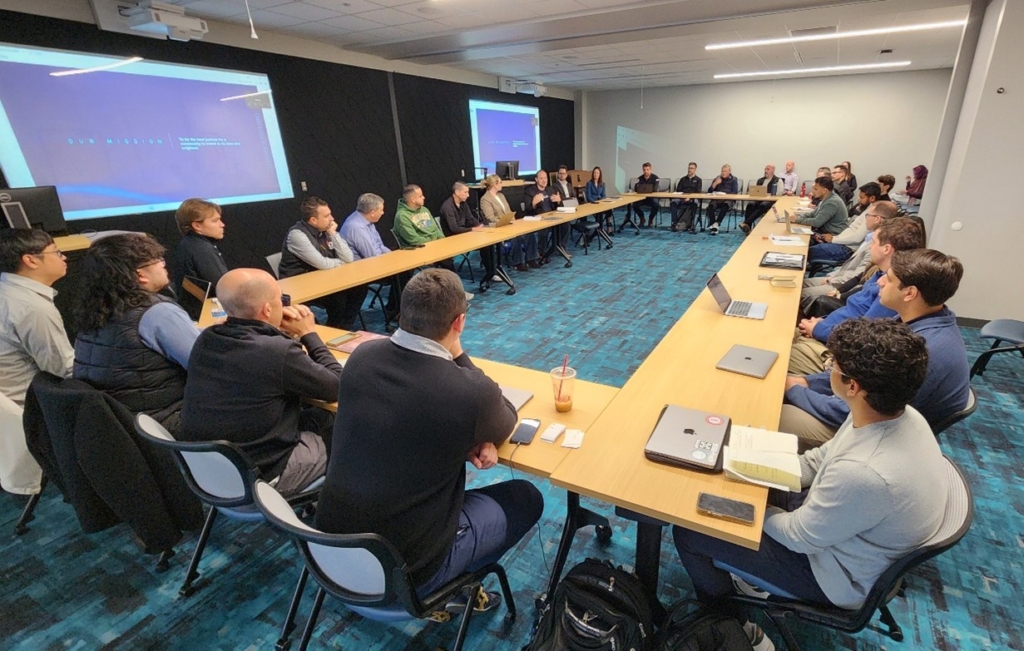
The Milwaukee roundtable on October 24, 2025
Policy Implications
CAE’s four roundtables with AI entrepreneurs produced a number of recommendations for policymakers regarding how they should think about, balance, and address both the risks and opportunities of AI. Participants’ recommendations included:
CAE greatly appreciates the time and insights of the more than 50 entrepreneurs who participated in our four roundtables. In 2026, CAE will continue to study the implications of AI for entrepreneurs, as well as the importance of entrepreneurs and startups to the development and application of AI.
We will also continue to share our findings, insights, and policy recommendations with policymakers as they work to establish the standards and guardrails needed to ensure the safe and productive development of AI.